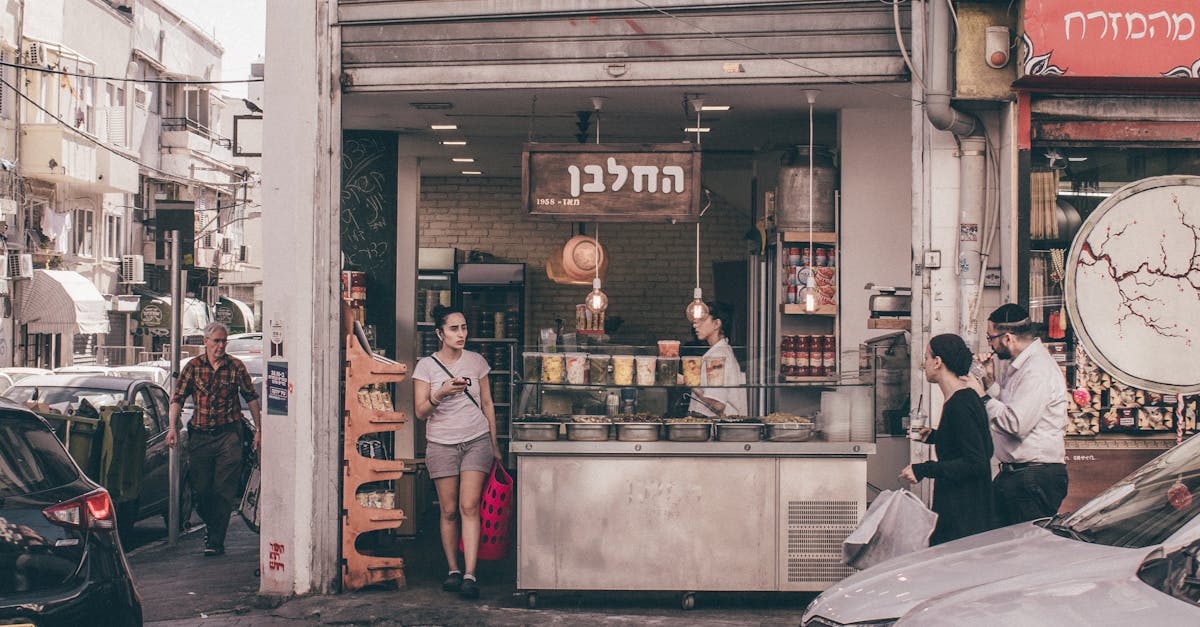
Ben Gurion airport, 7am, sleep-deprived and dragging a suitcase. The guy at passport control mumbles something at you in Hebrew and you freeze. Been there. I've watched dozens of first-time visitors hit that exact moment.
You don't need to speak fluent Hebrew. You just need twenty phrases that show up over and over in the first week. If you get these into your head before your flight, the rest of the trip feels very different.
Greetings (4 phrases)
The ones you'll hear the most, and the ones you can say back without thinking.
- shalom (שָׁלוֹם): hello, goodbye, peace. Works at any time of day, in any situation.
- boker tov (בֹּקֶר טוֹב): good morning. You'll say this twenty times before lunch.
- erev tov (עֶרֶב טוֹב): good evening
- laila tov (לַיְלָה טוֹב): good night
The magic three (3 phrases)
If you only memorize three words before your trip, make it these. They carry more weight than any other phrases on this list.
- toda (תּוֹדָה): thank you. Double it up with "toda raba" (thanks very much) when you mean it.
- bevakasha (בְּבַקָּשָׁה): please, and also you're welcome. One word, two uses.
- slicha (סְלִיחָה): excuse me, sorry, pardon. The Swiss Army knife of polite Hebrew.
Yes, no, I don't get it (3 phrases)
These are the ones you'll need when someone starts talking to you in fast Hebrew at the shuk.
- ken (כֵּן): yes
- lo (לֹא): no
- ani lo mevin (אֲנִי לֹא מֵבִין): I don't understand (male speaker). Women say ani lo mevina (אֲנִי לֹא מְבִינָה).
Ordering and shopping (3 phrases)
You'll use these at every café, restaurant, and market. Practice them a few times before you go.
- ani rotse (אֲנִי רוֹצֶה): I'd like. Women say ani rotsa (אֲנִי רוֹצָה).
- kama ze (כַּמָּה זֶה): how much is this?
- cheshbon bevakasha (חֶשְׁבּוֹן בְּבַקָּשָׁה): the bill, please
Getting around (3 phrases)
For buses, cabs, directions, and lost moments in unfamiliar neighborhoods.
- eifo (אֵיפֹה): where. Attach any place name to it. "Eifo hashuk?" means "where's the market?"
- yesh (יֵשׁ): there is / do you have. Useful everywhere: "yesh kafe?" means "is there coffee?"
- ata medaber anglit (אַתָּה מְדַבֵּר אַנְגְּלִית): do you speak English? (male). Women ask at medaberet anglit (אַתְּ מְדַבֶּרֶת אַנְגְּלִית).
Making friends (4 phrases)
Israelis are famously curious about visitors, and these four phrases open doors.
- ma shlomkha (מָה שְׁלוֹמְךָ): how are you? (to a male). To a female, ma shlomech (מָה שְׁלוֹמֵךְ).
- eikh korim lekha (אֵיךְ קוֹרְאִים לְךָ): what's your name? (to a male). To a female, eikh korim lakh (אֵיךְ קוֹרְאִים לָךְ).
- naim meod (נָעִים מְאוֹד): nice to meet you
- lehitraot (לְהִתְרָאוֹת): see you later. The warm Israeli way to say bye to someone you'd like to see again.
How to actually remember twenty phrases
Don't try to memorize all twenty in one sitting. You'll forget most of them by morning. Instead, break them into the six groups above and learn one group a day. Say each phrase out loud. Use them in made-up mini conversations with yourself on the flight over. Feel free to look silly.
If you want to hear them spoken by a native, the phrases section on Heb4You has audio for every phrase on this list and many more. And if you've got a question I haven't covered, you can always drop me a message from Tel Aviv.
Twenty phrases, six categories, one week. Your first trip will go from nerve-wracking to fun a lot faster than you'd think.
Ready to start practicing?
Browse Heb4You's free vocabulary topics with picture cards and native audio.
Browse Topics