The Jewish year is packed with holidays, and if you're learning Hebrew, knowing the basics of each one opens a huge cultural window. You don't need to be Jewish to care about them. In Israel, every holiday brings specific foods, songs, vocabulary, and traditions, and they shape the rhythm of the whole country. Here's a beginner's tour of the main ones.
Rosh Hashanah
Rosh Hashanah (רֹאשׁ הַשָּׁנָה), "head of the year", is the Jewish New Year. It falls in September or October. Israelis dip apples in honey as a symbol of a sweet year, blow the shofar (ram's horn), and have big family dinners.
Key greeting: Shana tova, a good year.
Yom Kippur
Yom Kippur (יוֹם כִּפּוּר), the Day of Atonement, comes a week after Rosh Hashanah. It's the most solemn day in the Jewish year. Observant Jews fast and pray from sundown to sundown. In Israel, the whole country goes quiet. No cars, no flights, no TV broadcasts. Even secular Israelis walk or bike the empty streets, and the silence is beautiful.
Key phrase: Tzom kal, an easy fast.
Sukkot
Sukkot (סֻכּוֹת), the Festival of Booths, comes a few days after Yom Kippur. Families build little outdoor huts (sukkah) decorated with fruit and greenery and eat meals inside them for a week. It commemorates the Israelites' wandering in the desert.
Key greeting: Chag sameach, happy holiday.
Hanukkah
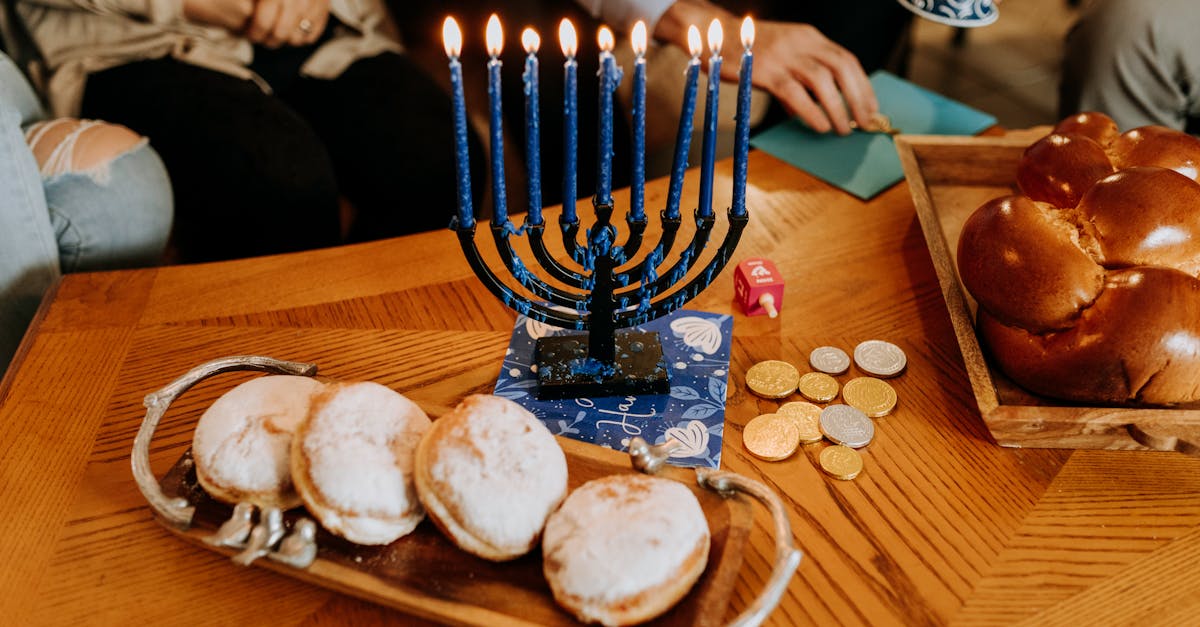
Hanukkah (חֲנֻכָּה), the Festival of Lights, comes in December (usually). It's an eight-day celebration of the rededication of the Temple in ancient Jerusalem. Israelis light a nine-branched candle holder (chanukiya), eat fried foods like sufganiyot (jelly donuts) and latkes, and play with a spinning top called a sevivon (dreidel).
Key greeting: Chanukah sameach, happy Hanukkah.
Tu BiShvat
Tu BiShvat (ט"ו בִּשְׁבָט), the New Year for Trees, falls in late January or early February. Israelis plant trees and eat lots of dried fruit. It's a small holiday but very much loved by kids and environmentalists.
Purim
Purim (פּוּרִים), usually in February or March, is the Jewish version of Halloween crossed with Mardi Gras. People dress up in costumes, send gift baskets of food (mishlochei manot), eat triangle-shaped cookies called hamantaschen, and read the Book of Esther out loud.
Key greeting: Purim sameach, happy Purim.
Passover (Pesach)
Pesach (פֶּסַח), Passover, falls in March or April. It commemorates the Exodus from Egypt. For a week, observant Jews don't eat leavened bread, and instead eat matzah (unleavened bread). The highlight is the seder, a ceremonial dinner on the first night where families retell the story of the Exodus.
Key greeting: Chag Pesach sameach, or just chag sameach.
Yom Ha'atzmaut
Yom Ha'atzmaut (יוֹם הָעַצְמָאוּת), Israeli Independence Day, falls in April or May depending on the Hebrew calendar. It celebrates the founding of Israel in 1948. Israelis have barbecues in parks, hang flags from balconies, and watch fireworks.
Key greeting: Chag atzmaut sameach.
Shavuot
Shavuot (שָׁבוּעוֹת), the Feast of Weeks, falls in May or June. It commemorates the giving of the Torah at Mount Sinai. The tradition is to eat dairy foods (cheesecake is huge), stay up all night studying religious texts, and decorate synagogues with flowers.
Tisha B'Av
Tisha B'Av (תִּשְׁעָה בְּאָב), the 9th of the month of Av, is a day of mourning for the destruction of the Temple. Observant Jews fast and read the Book of Lamentations. It's the second-most-solemn day after Yom Kippur.
The two universal greetings
If you only learn two holiday phrases, learn these:
- Chag sameach, happy holiday. Works for almost every festive Jewish holiday.
- Shana tova, a good year. Used around Rosh Hashanah.
These two will get you through 80% of Israeli holiday conversations.
Why the holidays matter
Even secular Israelis celebrate the major holidays because they shape the national rhythm. Rosh Hashanah in the fall, Hanukkah lights in December, Passover seders in the spring, Independence Day barbecues in May. Knowing the vocabulary for each one gives you a window into Israeli culture that no amount of grammar study can replace.
For more on Jewish holidays and vocabulary, our topics pages include holiday-specific word lists, and our blog will have dedicated posts on each major holiday.
Start with chag sameach and build from there. The calendar is your friend.
Ready to start practicing?
Browse Heb4You's free vocabulary topics with picture cards and native audio.
Browse Topics