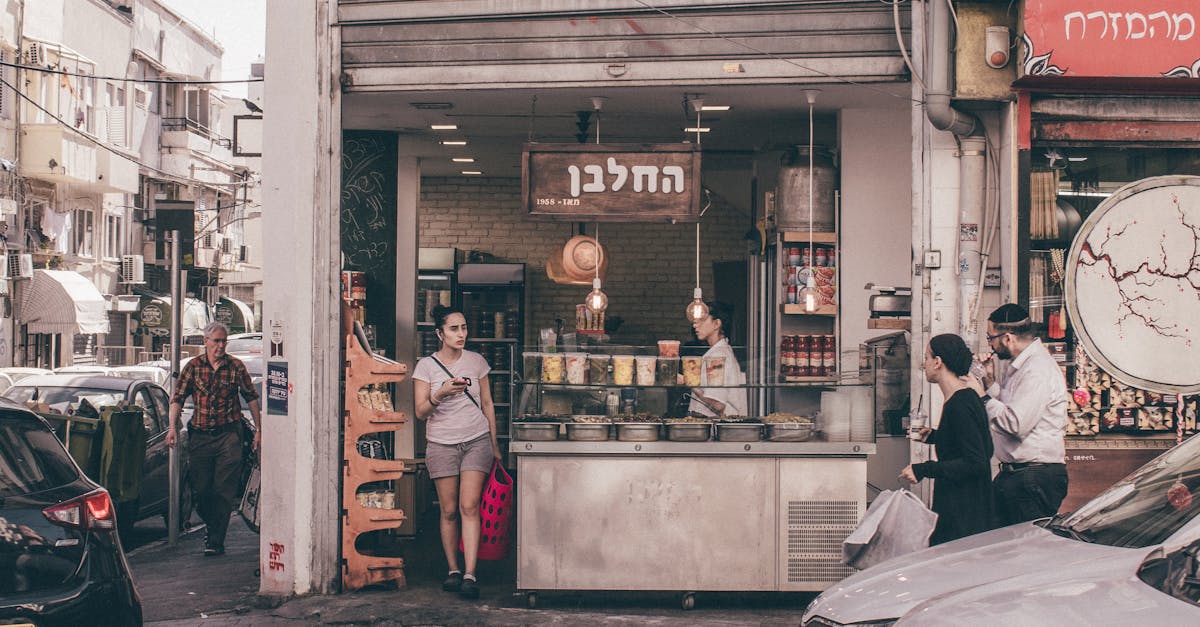
The first time I took a friend to the Carmel Market in Tel Aviv, she walked in, saw the wall of color and sound and smells, and said, "I have no idea how to buy anything here." Shopping in an Israeli shuk isn't like shopping in a supermarket. It's louder, friendlier, and way more interactive. Here are the phrases you'll actually use to navigate one without feeling lost.
Shuk vs. supermarket: know where you are
A shuk is an open-air market where vendors shout prices, stack produce in piles, and love to chat with customers. Prices are often negotiable, especially at smaller stalls. Tel Aviv's main ones are Shuk HaCarmel and Shuk Levinsky. In Jaffa, there's Shuk HaPishpeshim (the flea market).
A supermarket is more like what you're used to: fixed prices, barcodes, self-service. The phrases below work in both, but the shuk is where the real fun starts.
Asking prices
The single most useful question you'll ask in a shuk:
- Kama ze oleh? (כַּמָּה זֶה עוֹלֶה?), how much does it cost?
- Kama ha-agvaniyot? (כַּמָּה הָעַגְבָנִיּוֹת?), how much are the tomatoes?
- Kama le-kilo? (כַּמָּה לְקִילוֹ?), how much per kilo?
Vendors will usually answer with a number followed by shekel (שֶׁקֶל), the Israeli currency. "Eser shekel", ten shekel. "Esrim shekel", twenty shekel.
Quantities and weights
Most shuk items are sold by weight, usually in kilos or half-kilos. These are the key words:
- Kilo (קִילוֹ), kilo.
- Chatzi kilo (חֲצִי קִילוֹ), half a kilo.
- Rivi'a kilo (רְבִיעַ קִילוֹ), a quarter kilo.
- Echad (אֶחָד), one (for counting items, not weight).
- Shnayim, two. Shalosh, three. Arba, four. Chamesh, five.
A phrase you'll say constantly: ani rotseh chatzi kilo, bevakasha, I'd like half a kilo, please. Swap in whatever weight or quantity you need.
Asking about freshness and quality
Shuk vendors take pride in their produce. It's perfectly normal to ask about freshness or origin.
- Ze tari? (זֶה טָרִי?), is this fresh?
- Me'eifo ze? (מֵאֵיפֹה זֶה?), where is this from?
- Yesh yoter taim? (יֵשׁ יוֹתֵר טָעִים?), is there something better/tastier?
- Efshar lit'om? (אֶפְשָׁר לִטְעֹם?), can I taste it?
At a cheese, olive, or spice stall, asking to taste is completely normal. Vendors love it because it almost always leads to a sale, and you get a tiny free snack in the meantime.
Bargaining (sort of)
Israeli shuk bargaining isn't aggressive like in some other markets. You can ask for a better price politely, and sometimes you'll get one, especially at the end of the day or for large quantities. The phrases:
- Yesh hanacha? (יֵשׁ הֲנָחָה?), is there a discount?
- Efshar zol yoter? (אֶפְשָׁר זוֹל יוֹתֵר?), can it be cheaper?
- Im ani lokeach shnayim? (אִם אֲנִי לוֹקֵחַ שְׁנַיִם?), what if I take two?
Fruit and vegetable stalls usually won't budge on price. Clothing, accessories, and crafts (especially at the Jaffa flea market) often will. Try it with a smile, not a fight.
Finishing the transaction
When you've decided what to buy:
- Ani lokeach et ze (אֲנִי לוֹקֵחַ אֶת זֶה), I'll take it (masc). Ani lokachat for fem.
- Kama ze be-sach ha-kol? (כַּמָּה זֶה בְּסַךְ הַכֹּל?), how much is that in total?
- Efshar le-shalem be-karti? (אֶפְשָׁר לְשַׁלֵּם בְּכַרְטִיס?), can I pay by card?
Important note: many smaller shuk stalls are cash-only, or have a minimum purchase for cards. Bring some shekel cash for your first visit and you'll have an easier time.
The one phrase that makes vendors smile
Chaval al ha-zman (חֲבָל עַל הַזְּמַן), literally "a waste of time", which paradoxically means "amazing" or "so good it can't be described". If a vendor hands you a sample and it's delicious, say chaval al ha-zman and watch them beam. It's the kind of thing only locals say, and vendors love hearing it from a visitor.
A few useful shuk vocabulary words
- Agvaniyot (עַגְבָנִיּוֹת), tomatoes.
- Melafefon, cucumber.
- Tapuach, apple. Tapuach adama, potato (literally "earth apple").
- Lechem, bread. Chatzi lechem, half a loaf.
- Gvina, cheese.
- Zeitim, olives.
- Tamarim, dates.
- Te'enim, figs. Rimon, pomegranate.
For more food and shopping vocabulary, our food and beverages topic has dozens more words with audio, and our phrases section has more daily-use sentences.
Go hungry and curious
The best way to learn shuk Hebrew is to go to a shuk. Walk in, look around, point at things, ask prices, try samples. Vendors are patient with learners, especially if you open with Hebrew. Even a terrible shalom, kama ze oleh? will usually get you a smile and a slower, clearer answer.
Carmel Market on a Friday morning is one of my favorite places on earth. Grab a friend, eat too much, and put your new phrases to work.
Ready to start practicing?
Browse Heb4You's free vocabulary topics with picture cards and native audio.
Browse Topics