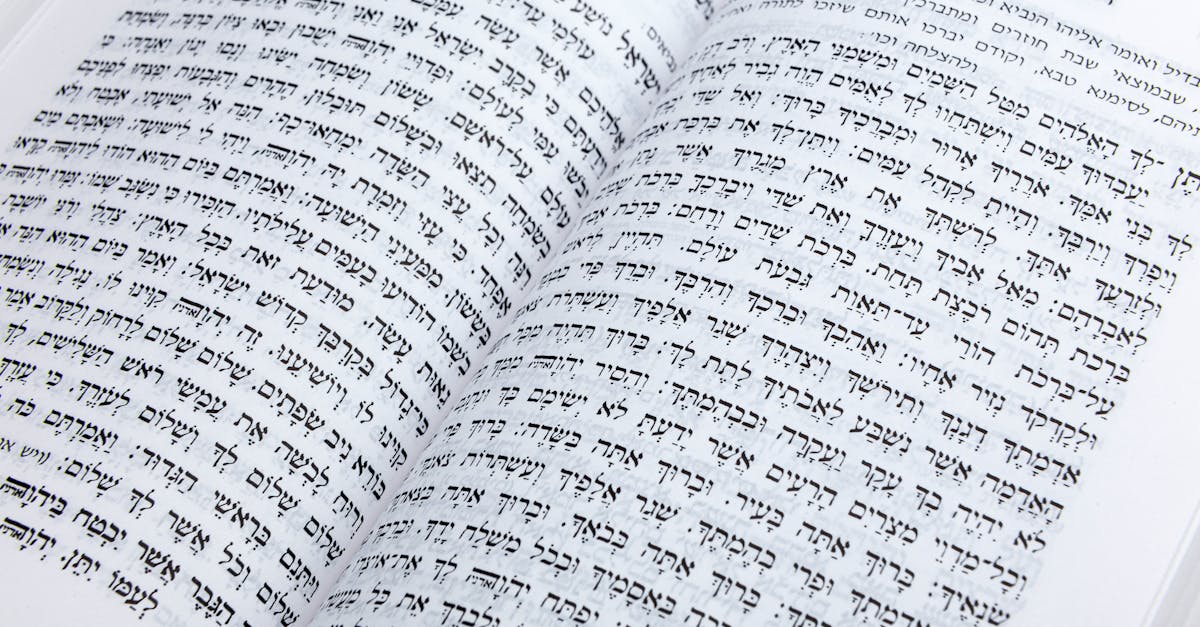
When people ask me how long it takes to learn the Hebrew alphabet, I tell them a week. Not full mastery, just real recognition: you pick up a sign in Tel Aviv and your brain starts reading before you think about it. That's what a week gets you if you do it right.
You don't need a course. You don't need an app. You need a notebook, a pen, and about fifteen minutes a day. Here's the exact plan I give friends who want to start.
Day 1 and 2: The easy letters
Start with the letters that look nothing like anything else. They'll give you a quick win, and quick wins matter more than anything in the first week.
- alef (א): silent, a carrier for vowels
- shin (ש): the "sh" sound
- lamed (ל): the "l" sound, the tallest letter in the alphabet
- mem (מ): the "m" sound
- samech (ס): a clean "s", round and simple
- tav (ת): the "t" you'll see at the end of most feminine words
Write each letter ten times. Say the sound out loud as you write it. That's all you need to do for the first two days. Don't try to read words yet. Just build the shape to sound connection.
Day 3 and 4: The look-alikes
This is where most beginners get stuck. Hebrew has a few pairs of letters that look almost identical, and telling them apart takes a bit of focused attention. Better to face them head-on early than to confuse yourself later.
- bet (ב) vs. kaf (כ): bet has a point at the bottom right, kaf is rounded
- dalet (ד) vs. resh (ר): dalet has a sharp corner, resh is soft
- hey (ה) vs. chet (ח): hey has a small gap on the top left, chet is closed
- zayin (ז) vs. vav (ו): zayin has a small hat on top, vav is plain
Write each pair side by side in your notebook and circle the differences. Your eyes will start catching them automatically within a day or two.
Day 5: The final letters
Five Hebrew letters change shape when they appear at the end of a word. These are the sofit letters, and they throw a lot of beginners off because they look like completely different letters at first glance.
- kaf becomes ך (final kaf)
- mem becomes ם (final mem)
- nun becomes ן (final nun)
- pe becomes ף (final pe)
- tsadi becomes ץ (final tsadi)
Don't overthink it. It's the same letter, just wearing a different outfit when it ends a word. Learn them as pairs and move on.
Day 6: Read your first real words
By day six you know enough letters to actually read. Start with the easiest words in Hebrew: your own name, the word shalom (שָׁלוֹם), and the word toda (תּוֹדָה). Then try words you already know by sound: pizza (פִּיצָה), cola (קוֹלָה), taxi (טַקְסִי). These are loan words from English and they're a gentle way to practice decoding without also having to learn vocabulary.
If you want more structured practice, the alphabet section on Heb4You walks you through every letter with audio, and you can grab a printable worksheet to write along with.
Day 7: A real sentence
On the last day, try reading a single sentence from a Hebrew children's book, a storefront sign, or a street sign. You won't understand most of it, and that's completely fine. The goal is just to prove to yourself that you can decode Hebrew letters into sounds. That proof is the thing that makes you come back for week two.
After the first week
A week gets you recognition. It doesn't get you fluency, vocabulary, or grammar. What it does get you is the feeling that Hebrew is readable, and that feeling is the single biggest obstacle I see in new learners. Once your brain stops treating the letters as random squiggles and starts seeing them as a language, everything else gets easier.
Fifteen minutes a day, seven days in a row. Pen, paper, and a little patience. That's the whole plan.
Ready to start practicing?
Browse Heb4You's free vocabulary topics with picture cards and native audio.
Browse Topics