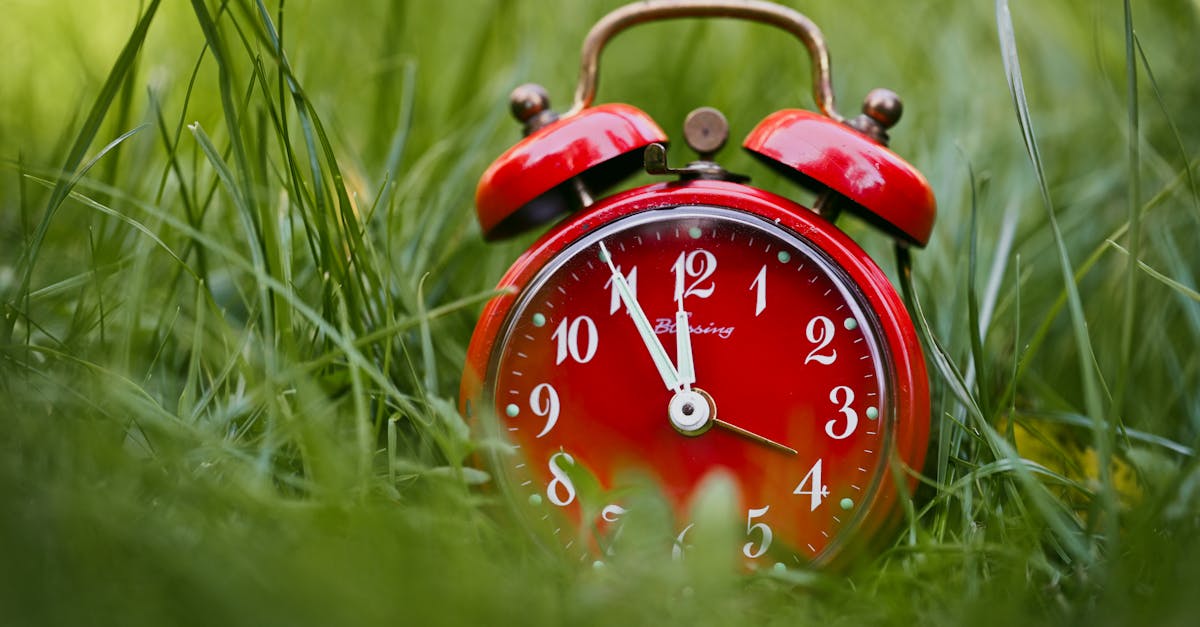
Telling time in Hebrew is simpler than most learners expect. You need a handful of number words, one preposition, and a couple of phrases for "half past" and "quarter past". Ten minutes of practice and you can tell time like a local. Here's how.
The core question
When you need to ask what time it is, say:
- Ma ha-sha'ah? (מָה הַשָּׁעָה?), what time is it? Literally "what the hour?"
That's the universal version. It works anywhere, with anyone.
Saying whole hours
For whole hours, the pattern is: ha-sha'ah + the number. Hebrew uses feminine numbers for time.
- Ha-sha'ah achat, 1 o'clock.
- Ha-sha'ah shtayim, 2 o'clock.
- Ha-sha'ah shalosh, 3 o'clock.
- Ha-sha'ah arba, 4 o'clock.
- Ha-sha'ah chamesh, 5 o'clock.
- Ha-sha'ah shesh, 6 o'clock.
- Ha-sha'ah sheva, 7 o'clock.
- Ha-sha'ah shmone, 8 o'clock.
- Ha-sha'ah tesha, 9 o'clock.
- Ha-sha'ah eser, 10 o'clock.
- Ha-sha'ah achat-esre, 11 o'clock.
- Ha-sha'ah shtem-esre, 12 o'clock.
Half past
Add va-chetzi (and a half) for half-past:
- Ha-sha'ah shtayim va-chetzi, 2:30.
- Ha-sha'ah sheva va-chetzi, 7:30.
- Ha-sha'ah tesha va-chetzi, 9:30.
Simple and consistent.
Quarter past and quarter to
- Va-reva, and a quarter. Example: shalosh va-reva, 3:15.
- Reva le-, quarter to. Example: reva le-shalosh, quarter to 3 (2:45).
"Reva le" is quarter to, and it flips the direction: you name the hour you're approaching, not the one you're leaving.
Specific minutes
For minutes past the hour, use the pattern: hour + ve- + minute number.
- Shalosh ve-esrim, 3:20.
- Chamesh ve-shalosh, 5:03.
For minutes to the hour (like 4:45), you can say:
- Chamesh chaser chamesh-esre, literally "five minus fifteen", meaning 4:45.
But most casual speakers just say arba arba'im ve-chamesh (four forty-five) and call it done. Israelis often use digital-clock readings in daily speech.
Morning, afternoon, evening
Hebrew doesn't have separate AM and PM. Instead, you add a time-of-day marker if it's ambiguous:
- Ba-boker, in the morning.
- Ba-tzohorayim, at noon.
- Acharey ha-tzohorayim, in the afternoon.
- Ba-erev, in the evening.
- Ba-layla, at night.
So ha-sha'ah shmone ba-boker means 8 AM, and ha-sha'ah shmone ba-erev means 8 PM.
At what time?
To ask when something happens:
- Be-eize sha'ah?, at what time?
- Be-sheva va-chetzi, at 7:30.
- Be-shmone ba-boker, at 8 in the morning.
Note the preposition be- which means "at". This is how you specify a time when something will happen.
Useful daily time phrases
- Ani me'uchar, I'm late.
- Ani makdim, I'm early.
- Be-zman, on time.
- Od chamesh dakot, another 5 minutes.
- Be-od chetzi sha'ah, in another half hour.
Try it
Right now, glance at a clock and say the time in Hebrew out loud. Then say what time you plan to eat dinner. Then say what time you went to bed last night. Three sentences, thirty seconds, real practice.
For more time vocabulary with audio, our topics pages include a full time section. And our phrases section has daily scheduling sentences.
Time in Hebrew is simpler than numbers in general. Once you know the hour pattern plus "half" and "quarter", you're 95% functional.
Ready to start practicing?
Browse Heb4You's free vocabulary topics with picture cards and native audio.
Browse Topics