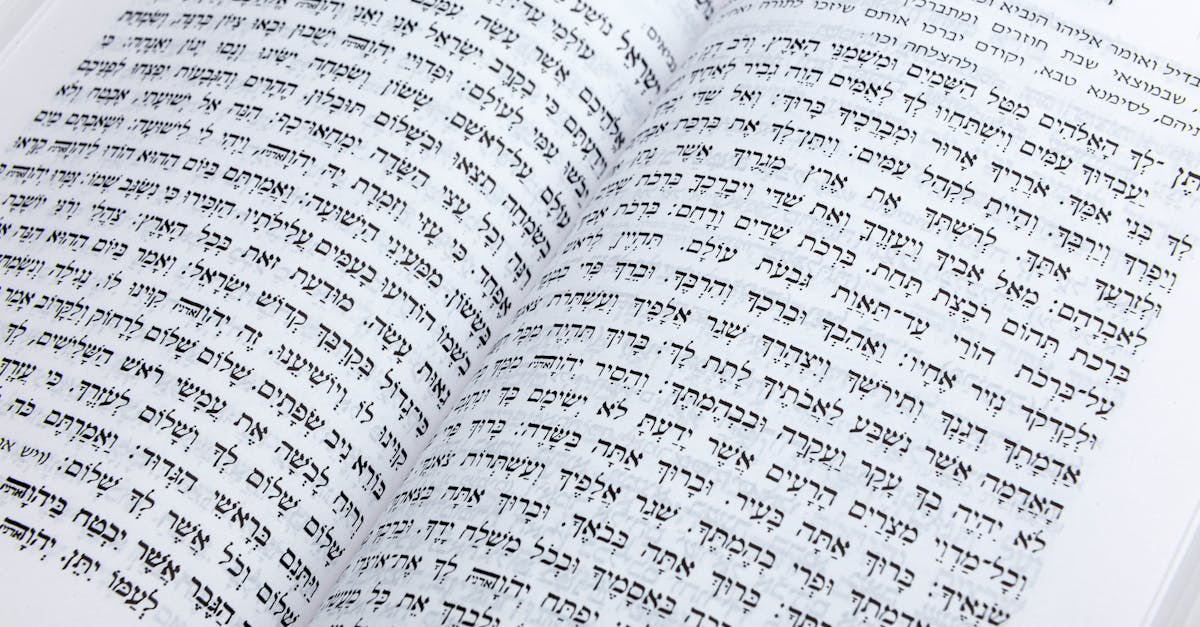
A student of mine once stared at a page of unvoweled Hebrew and said, "It looks like someone took all the vowels out for a joke." She wasn't wrong. Hebrew is usually written with only consonants, which is why those little dots and dashes you see scattered around beginner texts are such a lifeline. They're called niqqud, and they're the reason you can actually read Hebrew out loud when you're starting out.
What niqqud actually is
Niqqud (נִקּוּד) means "dotting" or "pointing." It's a system of small marks placed above, below, or inside Hebrew letters to tell you which vowel sound to make. Without niqqud, Hebrew gives you the skeleton of a word: the consonants. With niqqud, you get the full pronunciation served on a plate.
The word sefer (book) written without niqqud is just ספר. Those three letters could be read as sefer, safar, sapar, or sfar depending on context. With niqqud (סֵפֶר), there's only one way to say it. Huge difference when you're still learning.
The main vowel marks you'll see
There are about a dozen niqqud marks, but five do most of the heavy lifting. Learn these five and you can read about ninety percent of beginner Hebrew out loud:
- Patah (a small horizontal line under a letter): makes an "ah" sound, like in yad (יָד), hand.
- Kamats (a little T-shape under a letter): also an "ah" sound in modern Hebrew, like in shalom (שָׁלוֹם).
- Tseire (two horizontal dots under a letter): makes an "eh" sound, like in sefer (סֵפֶר).
- Hirik (a single dot under a letter): makes an "ee" sound, like in ir (עִיר), city.
- Holam (a dot above or to the left of a letter): makes an "oh" sound, like in yom (יוֹם), day.
The rest are variations and edge cases you'll pick up along the way.
Where you'll see niqqud and where you won't
Niqqud shows up in three main places: children's books, religious texts (especially the Torah), and language learning materials. That's it.
Israeli newspapers? No niqqud. Novels for adults? No niqqud. Street signs, menus, text messages, Instagram captions? Absolutely no niqqud. Israelis learn to read unvoweled Hebrew by building up a huge mental database of familiar word shapes, so context does the work that niqqud used to do.
Should you memorize every niqqud mark?
Yes, but not in a grind-it-out way. Learn them as you meet them. When you're reading a vocab list on our topics page or flipping through a children's book, each new mark will come attached to a word that helps you remember it. That's much stickier than sitting down with a chart and trying to drill them cold.
One thing worth knowing: some marks look almost identical but behave differently in old Hebrew. The difference between a kamats and a patah is one tiny line shape, and in modern spoken Hebrew they sound the same anyway. Don't let that stress you. Beginners often worry about nuances native speakers stopped caring about a century ago.
When to start dropping the training wheels
After three or four months of reading with niqqud, try reading one sentence a day without it. Use a children's book you already know, or a headline from a news site. You'll be surprised how much you can guess from shape and context. That's the point niqqud is getting you to: a place where you don't need it anymore.
For a deeper dive into the alphabet itself, our alphabet page pairs every letter with audio and examples, and our downloadable worksheets include niqqud practice pages you can print.
Niqqud isn't a permanent crutch. It's a first-month map that walks you into the city. Once you know the streets, you fold the map and put it away.
Ready to start practicing?
Browse Heb4You's free vocabulary topics with picture cards and native audio.
Browse Topics