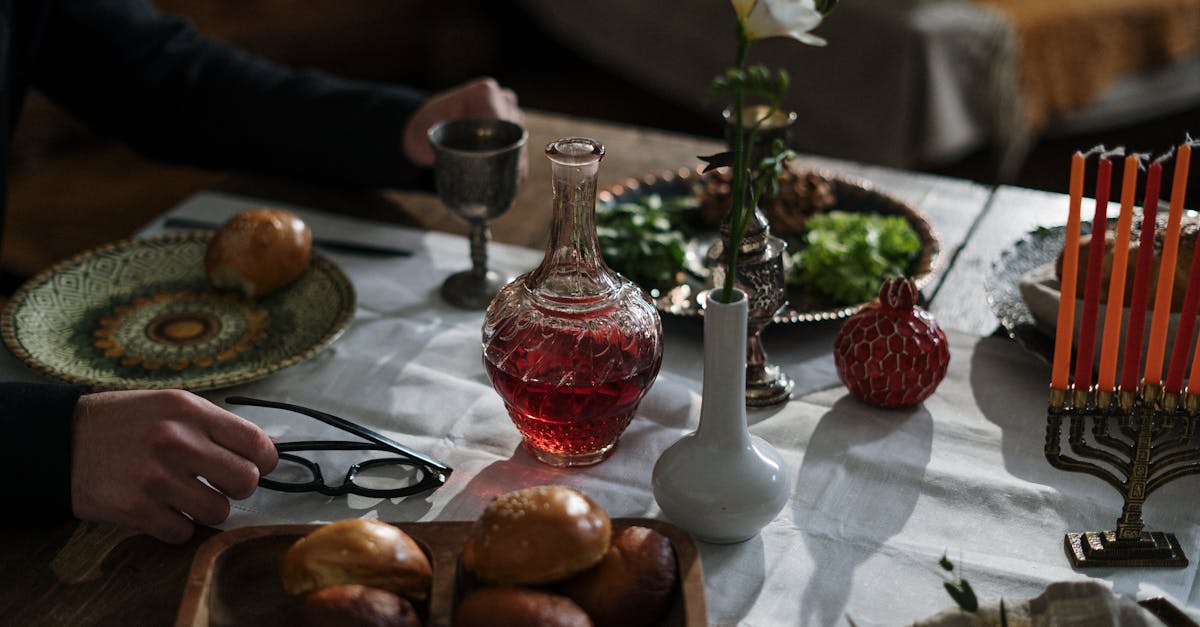
My first Passover as a kid I remember sitting at the table, watching my saba lead the seder, and having no idea what most of the words meant. Even Israeli kids grow into these terms over years of repetition. If you're attending a Passover seder for the first time or just want to follow along, here are the Hebrew words you'll hear and what they mean.
The basics
- Pesach (פֶּסַח), Passover. Literally "to pass over", referring to the Exodus story.
- Seder (סֵדֶר), the ceremonial meal on the first night of Passover. Literally "order", because the meal follows a specific sequence.
- Haggadah, the book used to guide the seder. Literally "the telling", because it tells the Exodus story.
- Chag sameach, happy holiday. The greeting for Passover.
The seder plate
At the center of the table is a ke'arah (plate) with six symbolic foods, each representing part of the Exodus story:
- Maror, bitter herbs (usually horseradish or romaine lettuce). Symbolizes the bitterness of slavery.
- Charoset, a sweet paste of apples, nuts, and wine. Symbolizes the mortar used by the Israelite slaves.
- Karpas, a green vegetable (usually parsley or celery). Symbolizes spring and rebirth.
- Beitza, a hard-boiled egg. Symbolizes mourning and the cycle of life.
- Zro'a, a roasted lamb shank bone. Symbolizes the Passover sacrifice.
- Chazeret, a second bitter herb.
Each food has a small moment during the seder when it's explained, tasted, or referenced.
The matzah
Matzah (מַצָּה) is unleavened bread. For the week of Passover, observant Jews don't eat any bread with yeast. Matzah is the substitute, and it shows up in dozens of forms: regular matzah at the start of the meal, matzah balls in soup, matzah crumbs in desserts.
The reason is that when the Israelites fled Egypt, they didn't have time to let their bread rise. Matzah commemorates that rush.
Key words during the seder
- Kiddush, the blessing over the wine. Four cups of wine are drunk during the seder.
- Yachatz, the breaking of the middle matzah. Half is eaten, half (the afikoman) is hidden for the kids to find.
- Afikoman, the hidden matzah. Kids search for it, and the one who finds it usually gets a small prize.
- Ma nishtana, "why is this night different?" The four questions traditionally asked by the youngest child at the table.
- Maggid, the storytelling part of the seder where the Exodus is retold.
- Makot, the ten plagues. A drop of wine is spilled for each one.
- Dayenu, "it would have been enough". A famous song sung during the seder listing all the miracles God did.
Common Passover foods
Beyond matzah, Passover has its own food tradition:
- Kneidlach, matzah balls. Usually served in chicken soup.
- Gefilte fish, a fish dish traditionally made from carp or whitefish.
- Charoset, the sweet paste mentioned above, also eaten as a spread.
- Kharoset... same thing, different spelling.
- Chicken soup, not religious but absolutely mandatory.
How to be a good guest
If you're invited to a Passover seder:
- Wear something nice but comfortable. Seders can last 3-4 hours.
- Follow the lead of the host. Open the Haggadah when they do, sip wine when prompted, ask questions when invited.
- Don't eat the seder plate items until they're officially shared. They're symbolic, not snacks.
- Learn the response amen for blessings, and chag sameach for greetings.
- Be patient. The meal comes after a long storytelling section. That's the structure.
A tiny personal note
The seder is one of the most beautiful Jewish rituals I know. It's a family reciting a 3,000-year-old story while eating, drinking, and laughing together. Even if you don't believe the history, the ritual itself is moving. Listen carefully.
For more holiday vocabulary and phrases, our topics pages include food and holiday words, and our phrases section has relevant greetings with audio.
Pesach sameach, and may your matzah ball be fluffy.
Ready to start practicing?
Browse Heb4You's free vocabulary topics with picture cards and native audio.
Browse Topics