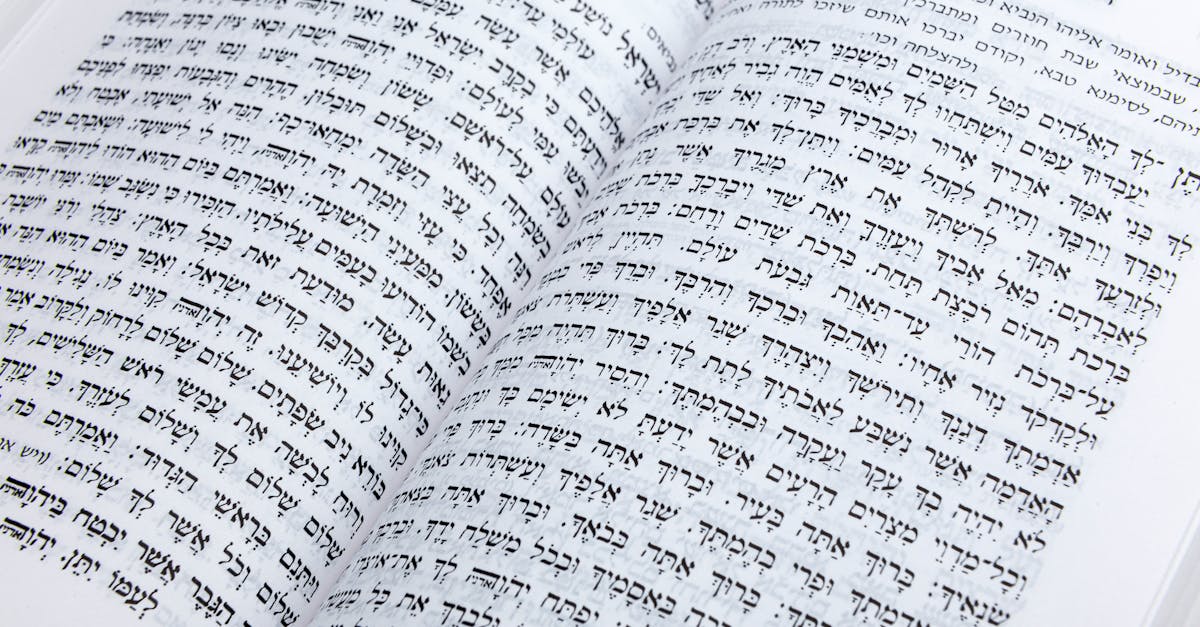
The first question almost every beginner asks me is, "Wait, do I really have to read right to left?" I always give the same answer: yes, and by next week you won't even notice. Hebrew's direction is the thing people fear most before they start, and the thing they forget about fastest once they do.
Where the direction comes from
Hebrew has been written right to left for roughly three thousand years. The most common theory is pretty practical: ancient scribes carved letters into stone with a chisel held in the left hand and a hammer in the right, so the natural direction of progress was right to left. When ink and papyrus showed up later, the habit stuck.
Most languages that share ancestry with Hebrew, including Arabic, Aramaic, and ancient Phoenician, also go right to left. It's not a Jewish quirk, it's a whole family of scripts that decided this direction made sense.
Why it's not the nightmare you expect
Here's the part nobody tells beginners: your brain reads whole words, not individual letters in a strict direction. Within a few days of practice, your eyes learn to jump to the right edge of a word automatically and pull it in as a single shape. You don't consciously think "now I read right to left", you just read.
Most learners hit this comfort point faster than learning the alphabet itself. The alphabet takes a week or two. The direction becomes invisible in about three days.
Numbers still go left to right
This is the one thing that actually throws people. Hebrew text flows right to left, but numbers and English words embedded in the text go left to right, same as English. So a phrase like "I was born in 1990" is written in Hebrew like:
נולדתי ב-1990
The Hebrew reads right to left ("noladeti be"), then the number 1990 reads left to right, exactly as you'd expect. Your brain handles the switch automatically after a week or two of exposure. Israeli kids learn to ping-pong between the two directions when they're six years old, so you can too.
Books open "backwards"
A Hebrew book's spine is on the right, and you open it by lifting the left cover toward you. The first page is where English would put the last page. This one feels strange the first time, then you stop noticing.
If you ever pick up an Israeli novel and feel lost, check which side the spine is on. If the spine is on the right, you're holding it correctly for Hebrew.
What you actually have to watch out for
Two small gotchas for beginners:
- Punctuation looks mirrored. A question mark in Hebrew ends a sentence the same way it does in English, but because the sentence runs right to left, the question mark lives at the left end. Same for periods and commas. Your brain adapts quickly.
- Typing is weird at first. On a computer, typing Hebrew means your cursor moves to the left as you add letters, even though the letters appear to the right of your cursor. The first hour of typing feels like your screen is haunted. Then it clicks.
A small mindset shift
Don't think of reading right to left as "backwards." Think of it as "the other way." Backwards implies wrong, and it's not wrong, it's just different. Millions of people read Hebrew and Arabic every day without thinking twice, and you'll be one of them soon enough.
If you want to start building that reflex, our alphabet page shows every letter in context, and our phrases section gives you whole sentences with audio so your eyes learn to flow in the right direction.
Give it a week of real practice. The direction will stop being a thing you think about, and you'll start wondering why you were ever worried.
Ready to start practicing?
Browse Heb4You's free vocabulary topics with picture cards and native audio.
Browse Topics